Ten years ago, on 1 October 2016, the Laboratory for Precision Cancer Medicine was founded by Prof. Frederik De Smet. What began as a laboratory that had to be built entirely from scratch grew over the course of ten years into a dedicated and multidisciplinary research team, driven by one constant goal: to contribute to better treatment options for patients with brain tumours and to gain a deeper understanding of this complex disease.
From Leuven to Boston and Back
The story of the laboratory began even before 2016. Frederik De Smet started his academic career at KU Leuven, where he learned the field under the guidance of Professor Carmeliet. After completing his PhD, he continued his training as a postdoctoral researcher in the Switch Lab, where he further developed his knowledge and expertise.
Not long afterwards, he moved to Boston with his family. There, he spent a year as a postdoctoral fellow at the renowned Dana-Farber Cancer Institute, affiliated with Harvard. This period gave him the opportunity to acquire new techniques and insights that would later form an important foundation for his own research.
Upon his return to Leuven, a position became available at KU Leuven. Frederik seized the opportunity. On 1 October 2016, the Laboratory for Precision Cancer Medicine officially began its work.
Building a Laboratory from Scratch
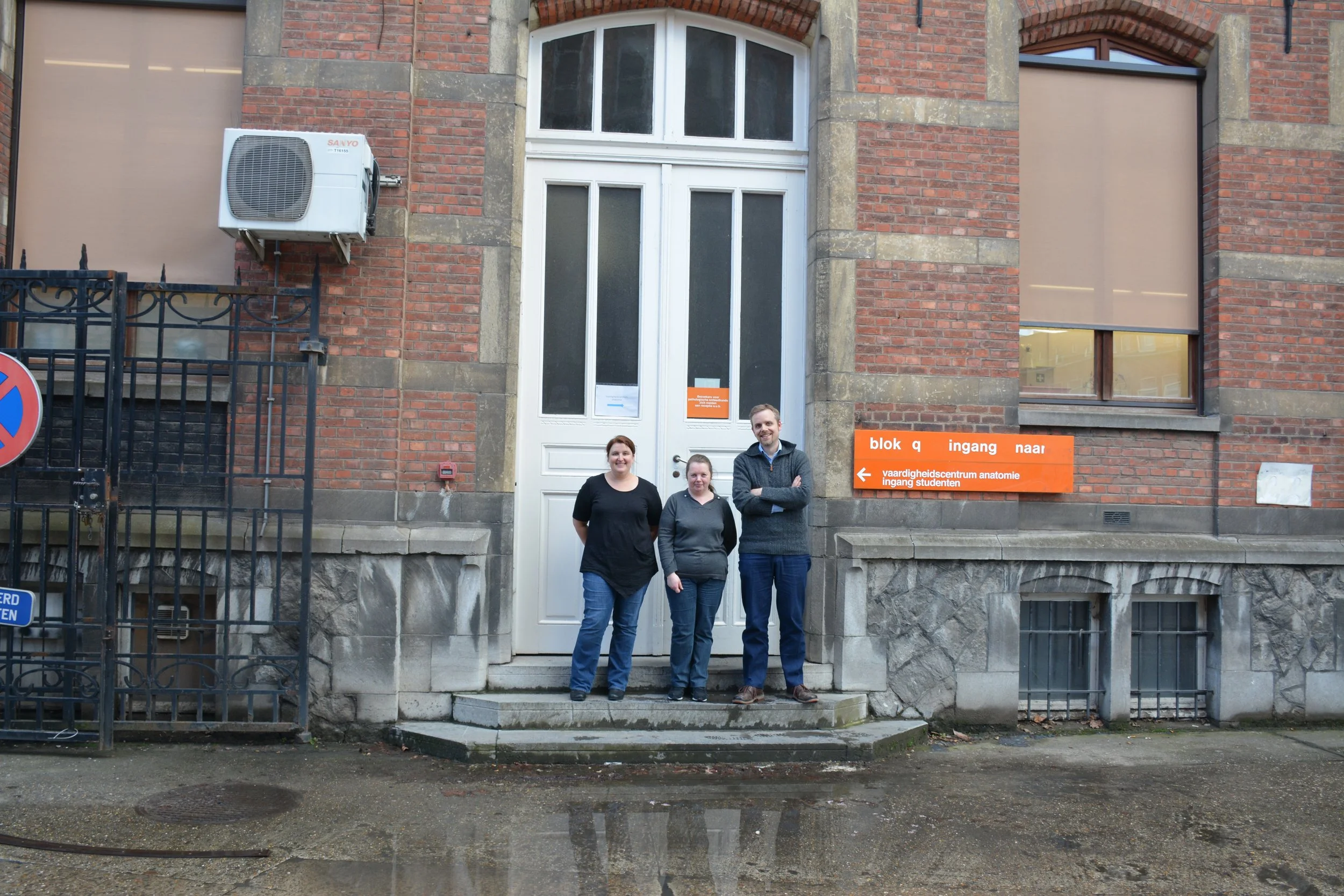
First team picture
An official start, however, did not mean that a fully equipped laboratory was ready and waiting. Equipment still had to be ordered, the spaces had to be set up, and all the practical pieces had to come together to create a functional research laboratory.
During this early period, Annelies also became part of the story. Frederik had known her since his time as a PhD student and knew that, with her strong profile and many years of experience as a laboratory technician, she would be a valuable asset in establishing the laboratory.
The first laboratory was located at Minderbroedersstraat 12, in the centre of Leuven. On the site where work is now well underway on the future Vesalius Museum, the foundations were laid for what would later become a larger research team.
Everything had to be built: from infrastructure and working methods to experience and routines. The pace was intense. At the same time, another major challenge was already on the horizon: the move to the new laboratories in O&N4 at Campus Gasthuisberg, planned for the summer of 2017.
That move marked a new step in the laboratory’s growth. The additional space and infrastructure made it possible to expand the research and gradually strengthen the team.
But even there, time did not stand still. As the laboratory and its research continued to grow, so did the need for space. In January 2025, another important move followed, this time to the new laboratories in O&N6. Thanks to the larger and more modern research facilities, we gained more room to continue our research, launch new projects and grow further as a team.
From a laboratory that was literally built from scratch in 2016 to new research facilities in O&N6: the successive moves also reflect the development and growth the laboratory has experienced over the past ten years.
The First Team Members
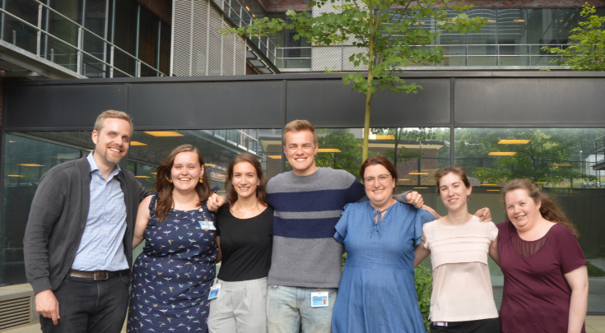
In October 2017, the laboratory received an important boost. Lien Solie, a clinical trial assistant, two PhD students, Dena Panovska and Veerle Haemels, and master’s student Pieter Jan Cremers joined the team. Marleen also joined as a laboratory technician. She had already completed a two-month internship in the laboratory during its start-up phase and therefore knew its operations well.
From that point onwards, the team continued to grow. In the years that followed, several researchers within the laboratory completed their PhDs and subsequently went on to pursue their own professional paths.
Today, the laboratory consists of a dedicated team of postdoctoral researchers, PhD students, master’s students, three laboratory technicians and a personal assistant. Each brings their own expertise, background and contribution to our shared research.
Ten Years of Research and Collaboration
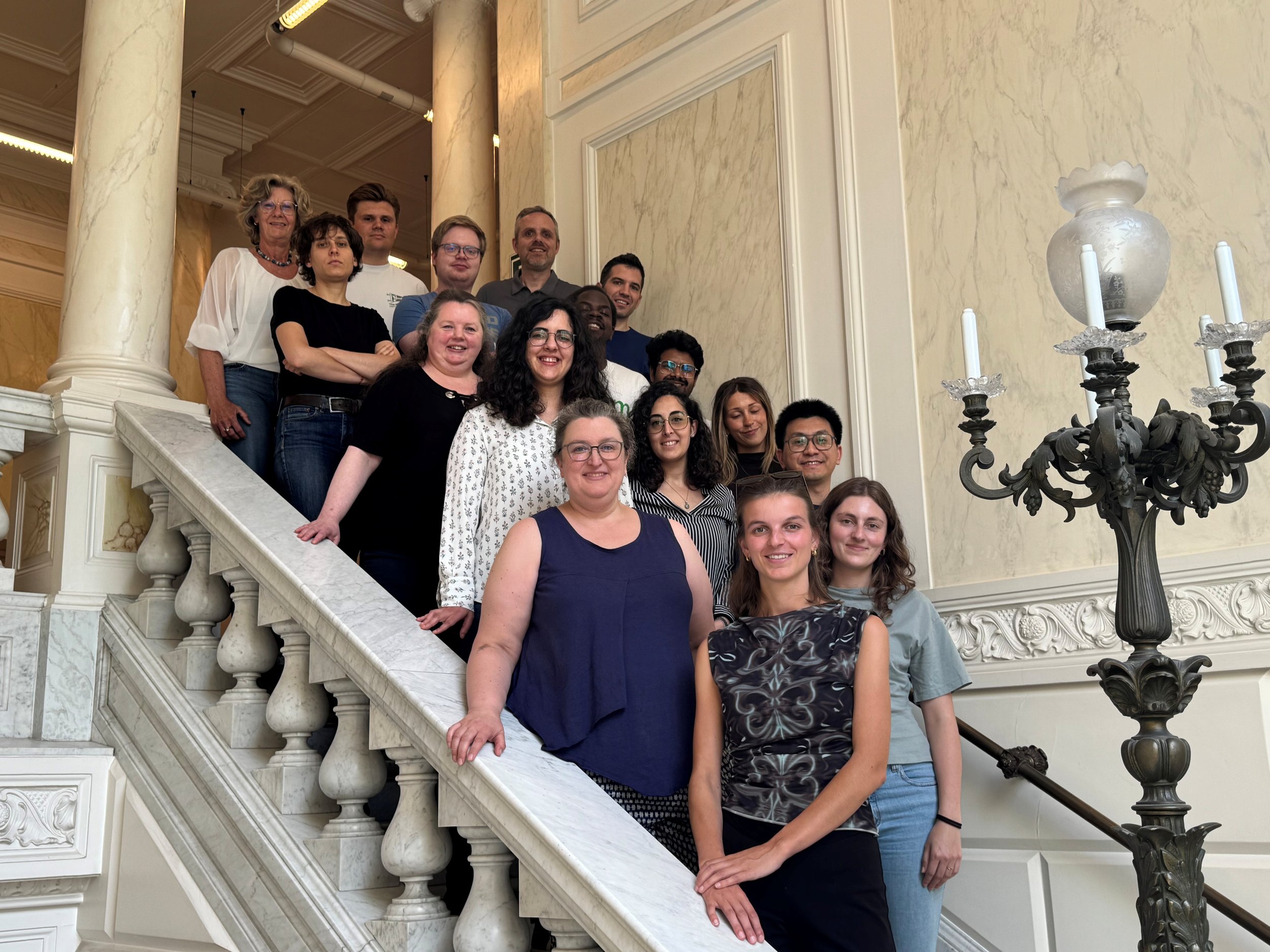
Over the past ten years, the laboratory and its researchers have come a long way. There have been numerous exciting scientific publications, new insights and inspiring collaborations with researchers and research groups both within and beyond KU Leuven.
Behind every result, however, lies a great deal of work: experiments that succeed, but also experiments that need to be repeated. New techniques that have to be learned. Hypotheses that are confirmed, but just as often need to be revised or rejected. And, time and again, the question of how we can take another step forward in understanding brain tumours.
One Driving Force, Ten Years On
Although the laboratory has changed and grown considerably over the past ten years, one thing has remained the same.
Our driving force remains the same: to search for better treatment options and gain a deeper understanding of brain tumours, to give patients more hope.
Ten years of research therefore means more than ten years of scientific progress. It means ten years of collaboration, learning, trying, persevering and continuing to search.
From an empty laboratory on Minderbroedersstraat to the modern research facilities in O&N6: it is a story written by many people.
And the story continues.
Here’s to the next ten years.
Marie Curie: "A scientist in his laboratory is not a mere technician: he is also a child confronting natural phenomena that impress him as though they were fairy tales."(from the biography Madame Marie Curie published in 1937)